The digital age and social media have triggered an explosion of parenting philosophies. Where past generations largely relied on tradition or basic intuition, parents today can choose from a colorful spectrum of specialized, often vividly named approaches.
Here is an overview of the most distinctive and widely discussed parenting styles that have emerged and evolved over the past few decades:
- Authoritative parenting
The classic developmental benchmark. Characterized by high expectations paired with high emotional warmth, open dialogue, and consistent, fair boundaries. - Authoritarian parenting
A traditional, strict model emphasizing absolute obedience, high discipline, and order, with minimal negotiation or verbal give-and-take. - Permissive (indulgent) parenting
Warm and nurturing, but distinctly averse to confrontation, rigid rules, or enforcement. Parents often adopt the role of a supportive friend rather than an authority figure. - Uninvolved (neglectful) parenting
Low in both demands and responsiveness. Parents provide basic survival necessities but remain emotionally and educationally detached from the child’s daily life. - Helicopter parenting
Marked by hyper-involvement and close oversight. Parents hover constantly over academic, social, and athletic pursuits to prevent failure or distress. - Lawnmower (snowplow) parenting
Taking intervention a step further than hovering: parents actively move ahead of the child to smooth out setbacks, eliminate obstacles, and clear the path to effortless success. - Tiger parenting
An intensive, high-discipline framework prioritizing academic excellence, musical mastery, and rigorous work ethic above leisure or unstructured play. - Elephant parenting
The direct philosophical counterbalance to Tiger parenting. Focused almost exclusively on warmth, emotional security, soothing, and unconditional encouragement during the early years. - Dolphin parenting
A balanced, collaborative approach aimed at steering children with gentle guidance, flexibility, and play, cultivating internal motivation rather than strict compliance. - Free-range parenting
Inspired by mid-20th-century childhoods, this model champions independence, outdoor exploration, and spatial autonomy, allowing children to assess risks with minimal direct supervision. - Gentle / positive parenting
Focused on empathy, emotional regulation, and mutual respect. Traditional punishments like timeouts or grounding are replaced with calm communication and natural consequences. - Lighthouse parenting
Parents position themselves as stable beacons of light on the shore—always visible, dependable, and guiding from a healthy distance, while allowing children to navigate their own rough waters. - Attachment parenting
Grounded in attachment theory, emphasizing constant physical proximity, baby-wearing, extended breastfeeding, co-sleeping, and immediate response to distress signals. - Slow parenting (simplicity parenting)
A deliberate rebellion against over-scheduling. Emphasizes unstructured family time, fewer toys, unhurried routines, and room for boredom to spark organic creativity. - Panda parenting
A hybrid style offering a warm, cuddly foundation of support while stepping back to let children solve problems and make their own choices at their own pace.
While parenting styles define the emotional and behavioral climate at home, intentional education is the engine that drives a child's cognitive growth. Whatever parenting approach resonates most with your family, the ChildUp early learning method seamlessly complements it—turning everyday playful moments into structured cognitive milestones before formal schooling begins. To keep pace with the latest insights, research, and practical advice on early childhood development, be sure to follow ChildUp Early Learning & Parenting News.
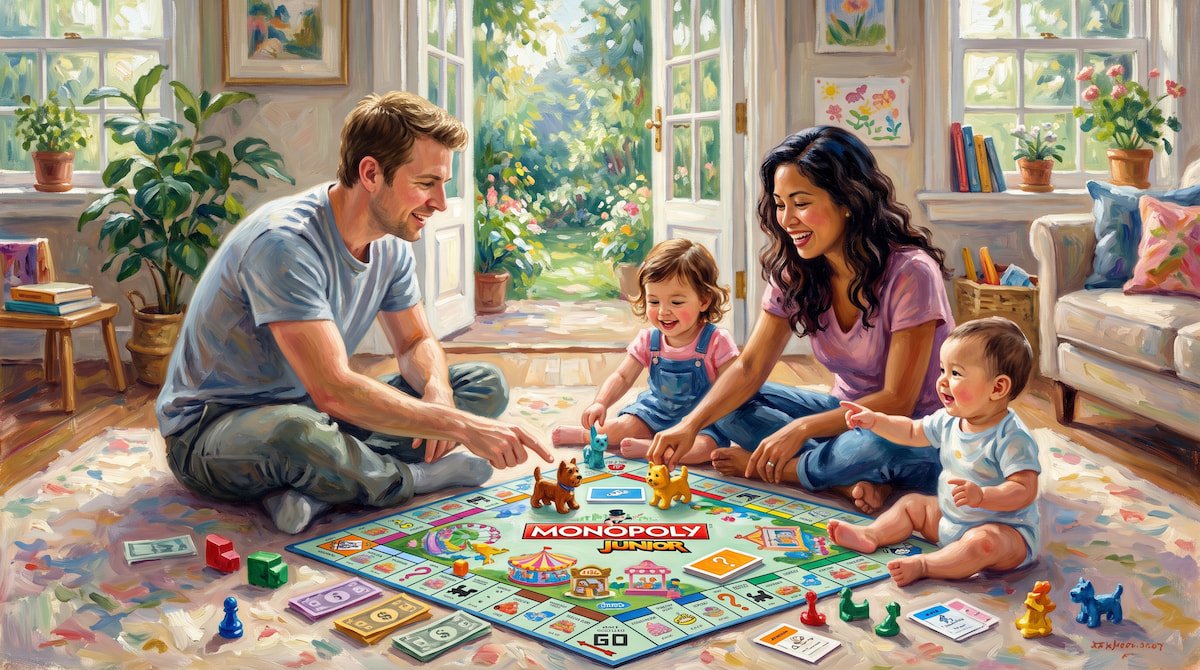
Picture: Great foundations begin with simple moments around the game board (ChildUp - Gemini)