One of the most anticipated milestones for any parent is that first "Mama" or "Dada." However, the journey to speech begins long before the first word is ever spoken. A recent report from the Cleveland Clinic outlines the typical timeline for language development, but at ChildUp, we view these milestones not just as finish lines, but as windows of opportunity. Language is the ultimate tool for autonomy, and fostering it requires more than just waiting—it requires a high-touch, consistent environment.
The pre-verbal foundation
Language starts with cooing at two months and babbling by six. These aren't just "cute noises"; they are the brain's way of testing sounds and social feedback loops. When you respond to a baby’s babbles as if they are part of a real conversation, you are reinforcing the "serve and return" patterns that build neural pathways for complex speech.
The "word explosion" phase
While the first word usually arrives around the 12-month mark, the real acceleration happens between 18 and 24 months. During this "vocabulary spurt," children can learn several new words a day. The key to maximizing this period is a rich linguistic environment—365 days a year of narrating your day, reading together, and naming the world around them.
Why human interaction beats "educational" screens
The research remains clear: babies learn to talk by watching human faces, tracking lip movements, and feeling the emotional weight of live interaction. No app can replace the nuanced social cues of a parent. To build a verbal child, prioritize high-touch engagement over high-tech distractions.
The social side of speech
As toddlers grow, they begin to "talk" to their peers. Even if their sentences are incomplete, these interactions are vital for developing social intelligence. Observing toddlers in groups shows that they are often "deep in conversation" through gestures, tones, and shared focus—a precursor to the collaborative skills they will need later in life.
Understanding individual timelines
Every child follows their own path. While milestones provide a helpful guide, the ChildUp model focuses on the process of engagement. If you are consistently reading, playing, and talking with your child, you are providing the "fertile soil" for their verbal talent to bloom when they are ready.
Treating every story as a lesson
At ChildUp, we believe "Talent is made, not born." Speech is the first great entrepreneurial leap a child takes—using their voice to influence the world around them. By treating every babble as a breakthrough and every story as a lesson, you aren't just helping them talk; you are giving them the confidence to lead.
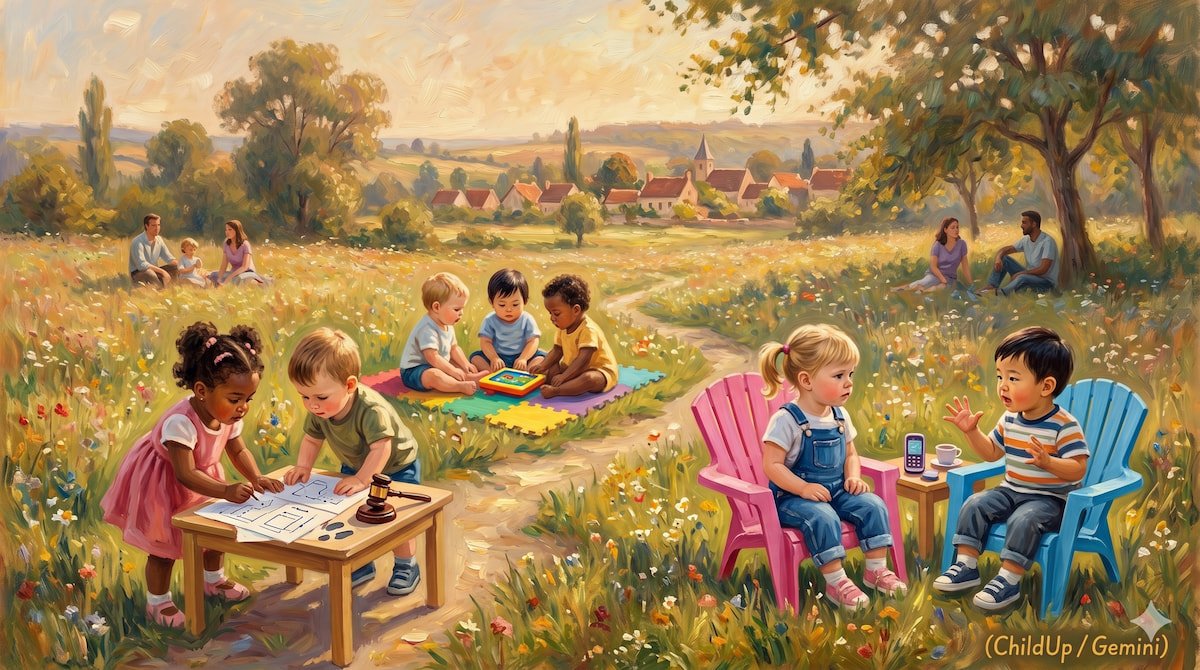
Picture: The Meadow Summit (ChildUp / Gemini)