
"I’m bored." It is a phrase every parent knows well, often delivered with a heavy sigh. The natural instinct for many of us is to rush in with a solution—a tablet, a snack, or a structured activity—to make the discomfort go away. However, according to experts in child development, constantly entertaining our children might actually be doing them a disservice.
Research suggests that boredom is not a problem to be fixed, but a necessary emotion that plays a crucial role in a child’s development.
Why boredom is actually healthy
Boredom is a universal human experience, and from an evolutionary perspective, it serves a vital purpose. Just as physical pain signals us to avoid harm, boredom signals that we need to change what we are doing. It acts as a prompt to find new goals, explore new interests, and take on fresh challenges.
When we rush to alleviate boredom, we deprive children of the opportunity to develop these self-regulation skills. A child who is never bored may struggle to develop executive function, the set of mental skills that includes planning, focusing attention, and juggling multiple tasks.
The link between downtime and creativity
In our fast-paced world, we often undervalue simply doing "nothing." However, downtime is essential for reflection. It creates the mental space necessary to ask big questions and find personal meaning.
- Sparking creativity: When children are left to their own devices, they are forced to use their imagination to create fun.
- Building resilience: Learning to sit with the discomfort of boredom helps children build tolerance for less-than-ideal situations, a skill that is vital for emotional maturity.
The risks of over-scheduling
There is growing evidence that shielding children from boredom can have negative long-term effects. Studies have found that college students with "overly involved" parents—those who structured every moment of their childhood—reported higher levels of depression and anxiety.
Furthermore, relying on screens to pacify a bored child can hinder their ability to regulate emotions. If a device is always the answer to boredom, the child never learns to manage that feeling independently.
How parents can handle the "I'm bored" complaint
Changing your approach to boredom takes practice, especially if your child is used to constant entertainment. Here are a few ways to foster a healthy relationship with downtime:
- Don't feel guilty: Remind yourself that boredom is good for them. You are not neglecting them; you are giving them an opportunity to grow.
- Start small: For younger children, even five minutes of unstructured time is a good start. As they get older, you can increase this time.
- Offer a menu, not a solution: If they are truly stuck, suggest a few broad options (e.g., "You can play outside, read a book, or build something"), but let them take the lead.
- Resist the rescue: If they reject your suggestions, that is okay. Let them sit with the boredom until they find their own way out of it.
Ultimately, our goal as parents is to raise self-reliant adults. By stepping back and allowing our kids to be bored, we give them the space to become self-directed, creative, and resilient individuals.
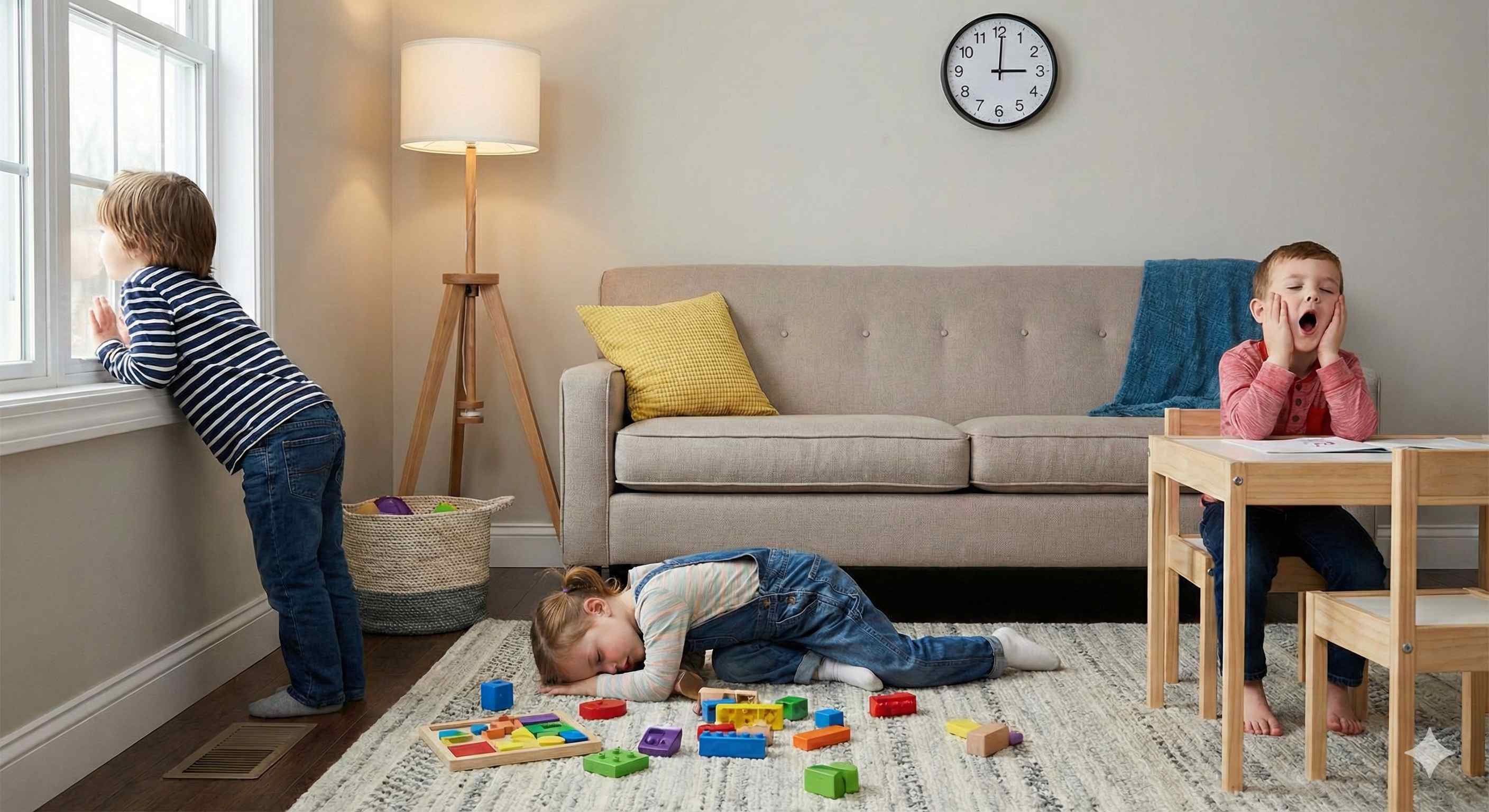
Picture: The hidden benefits of boredom (ChildUp / Gemini)