
The "screen time" dilemma
It is the question on every modern parent’s mind: Is letting my toddler watch a tablet hurting their development?
With screens becoming an unavoidable part of daily life—a trend accelerated by the pandemic—researchers have been working hard to understand exactly how digital devices affect our youngest children (ages 0 to 6), specifically when it comes to learning to speak and building a vocabulary.
A recent systematic review published in Cureus has analyzed the latest evidence to give us a clearer picture. The verdict? It’s not just about how much they watch, but how they watch it.
The risks of "passive" viewing
The review confirms a long-held concern: high levels of unsupervised, passive screen time are frequently linked to weaker language development.
The reason isn't necessarily that the screen itself is "toxic," but rather what it replaces. When a child is silently staring at a cartoon, they are missing out on face-to-face interactions. Language is learned through the "serve and return" of conversation—hearing words, seeing facial expressions, and responding. Passive screen time creates a "linguistic void" where that essential practice doesn't happen.
The good news: Interaction is key
However, the study found that not all screen time is created equal. The negative effects can be significantly reduced—or even flipped—if the screen time is interactive and educational.
The "secret sauce" is caregiver participation. When parents watch with their children (co-viewing) and talk about what is happening on the screen ("Look at the blue bird! What is he doing?"), the device becomes a tool for connection rather than isolation.
Practical tips for parents
Based on these findings, here is how to manage screen time to protect your child’s language skills:
-
Delay the start: Adhere to guidelines (like those from the AAP) that recommend avoiding screens for children under 18 months, except for video chatting with family.
-
Limit the duration: For children aged 2 to 5, aim for less than one hour of high-quality programming per day.
-
Don't use it as a babysitter: Try to avoid using screens solely to keep a child quiet. If you do, try to engage with them about what they watched afterwards.
-
Watch together: Turn screen time into "we time." Ask questions, sing along, and make it a shared activity.
The takeaway
Screens are here to stay, but they don't have to be the enemy of language development. By shifting from "passive watching" to "active engagement," you can ensure your child continues to build the rich vocabulary they need to thrive.
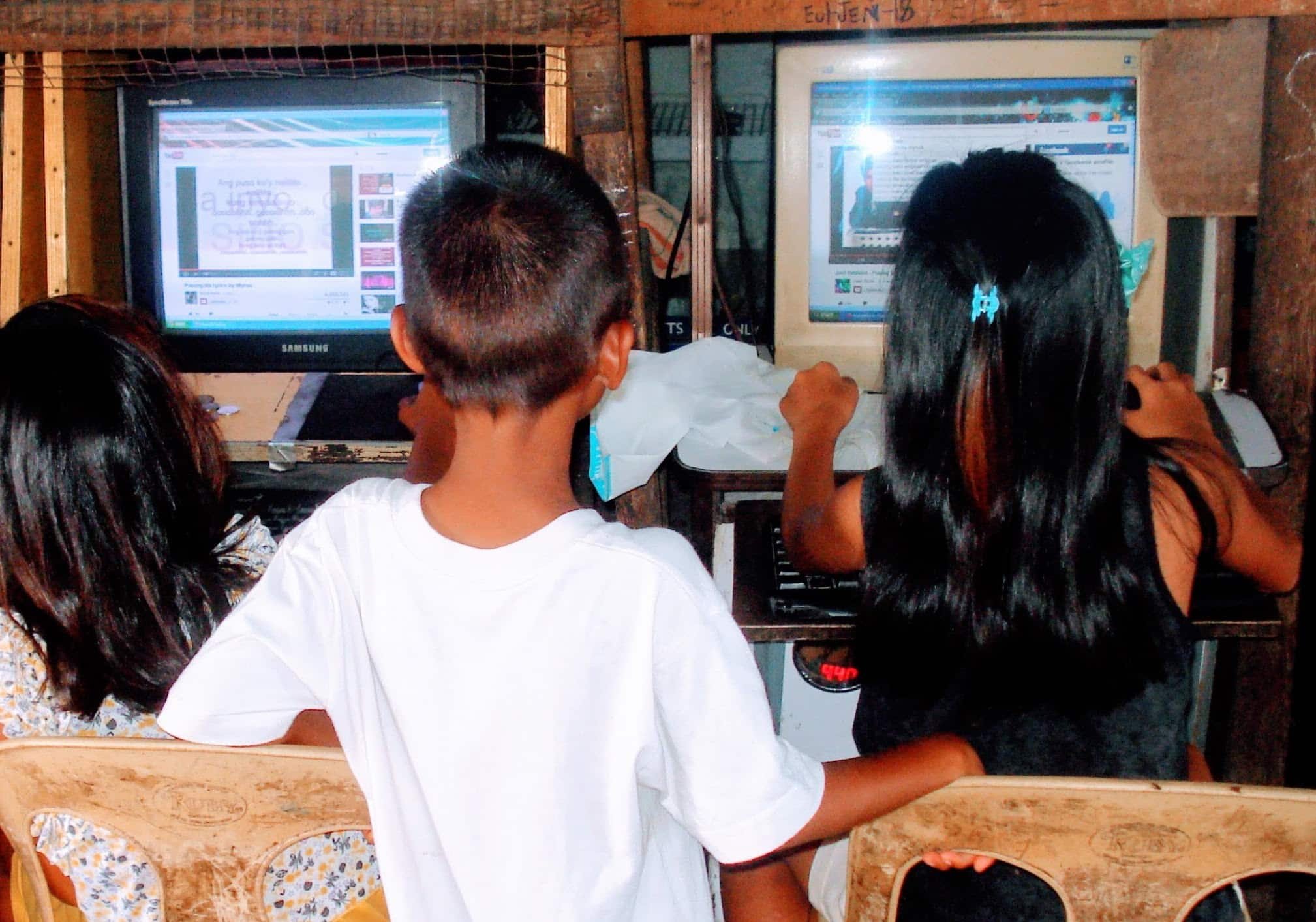
Picture: Screen time is universal: Children playing in Cebu City, Philippines (ChildUp.com)