
Recent scientific breakthroughs continue to reveal the astonishing capabilities of the infant brain. A new study has confirmed that the ability to perceive a musical beat is not something we learn over time, but a "remarkable ability" we are born with. This finding suggests that rhythm is deeply embedded in our biology, providing a foundational building block for both music and language development from the very first days of life.
The neuroscience of "beat perception"
Researchers from the University of Amsterdam and the University of Szeged used EEG (electroencephalography) to monitor the brain activity of 27 newborns. They found that even at just a few days old, babies can detect a consistent pulse in music. Most impressively, the infants' brains showed a specific response when a beat was intentionally left "missing" from a rhythm, proving they weren't just reacting to sounds but were actively predicting the next beat.
Innate talent vs. learned skill
For years, scientists debated whether babies learn rhythm while in the womb by listening to their mother’s heartbeat or the melody of her voice. However, this study suggests that "beat perception" is a distinct, innate cognitive mechanism. While fetuses do become familiar with the prosody (rhythm and melody) of language before birth, the specific ability to track a musical beat appears to be a separate, hard-wired trait of the human brain.
A precursor to language and social bonding
In the context of Early Childhood Development, rhythm is more than just a musical skill. The ability to synchronize with a beat is closely linked to a child’s future ability to perceive the nuances of speech and engage in social interactions. Being "in sync" with others through music or movement fosters emotional security and cooperation, which are essential components of the ChildUp Early Learning Model.
How parents can nurture "the rhythm"
Since newborns are already biologically "tuned in" to rhythm, parents are encouraged to incorporate music into their daily routines from day one. Singing lullabies, gently tapping a beat on a baby’s feet, or dancing together are not just fun activities; they are powerful ways for parents to act as their child's "first teachers," strengthening the neural pathways responsible for auditory processing and motor coordination.
The bottom line
This research reinforces the ChildUp mantra that "Talent is made, not born"—but it also shows that nature gives us a head start. By recognizing and building upon these innate abilities, parents can give their children a precious advantage in their cognitive and emotional journey. Music isn't just a hobby; it is a fundamental part of the human experience that begins in the cradle.
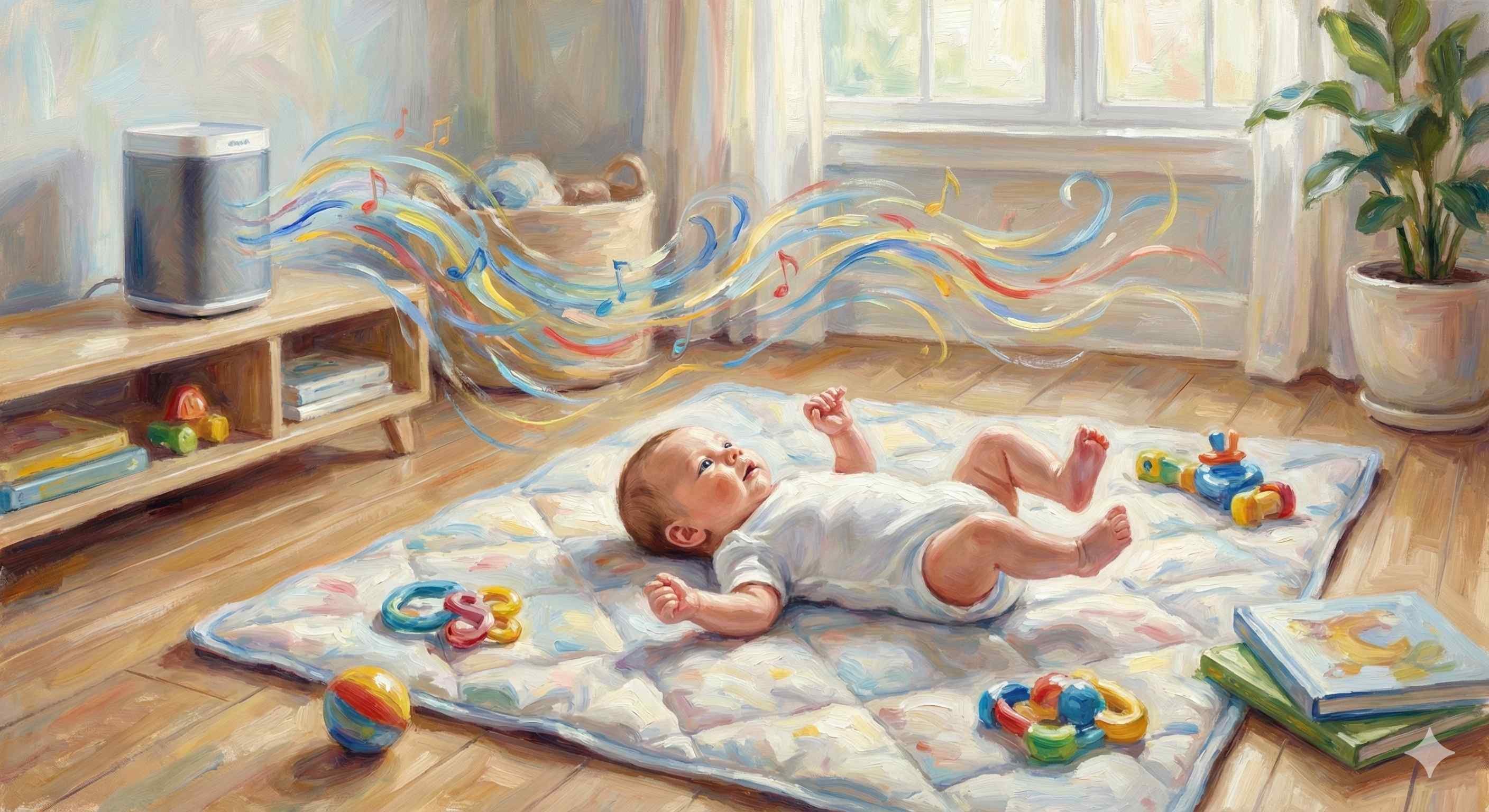
Picture: Newborn baby listening to music (ChildUp.com / Gemini)